
When hair loss has progressed beyond early thinning, such as when you’re facing significant recession, a visible crown, or extensive coverage loss, single-treatment approaches fall short. Advanced hair loss generally doesn’t respond to one-dimensional solutions. It requires surgical precision, medical expertise, and strategic planning that addresses not just where you are today, but where your hair loss is heading.
This is where comprehensive care provides transformative results.
The Problem with Piecemeal Approaches
Many patients experiencing advanced hair loss find themselves navigating a fragmented landscape of solutions. They try topical treatments that slow progression but can’t restore what’s gone. They consider hair transplants that address visible areas but leave underlying hair loss unmanaged. They pursue one treatment at a time, hoping each will be the answer, without understanding how different therapies work synergistically.
The result? Suboptimal outcomes that require repeated corrections, wasted time and resources, and continued frustration as hair loss progresses in untreated areas while restored zones look isolated and unnatural.
Advanced hair loss requires a strategic treatment plan that integrates multiple treatment modalities, each deployed at optimal timing to maximize both immediate visual impact and long-term sustainability.
Understanding Advanced Hair Loss
Before discussing comprehensive treatment, it’s essential to understand what makes advanced hair loss different from early-stage thinning.
Pattern Progression Male pattern baldness follows predictable progression patterns, typically classified using the Norwood scale. Advanced stages involve significant frontal recession extending beyond the temples, thinning or balding at the crown, and reduced density across the midscalp. Female pattern baldness, classified by the Ludwig scale, presents as diffuse thinning across the crown with varying degrees of frontal involvement.
Once hair loss reaches advanced stages, dormant follicles have been miniaturized for years. Simply stimulating these long-dormant follicles with topical treatments produces minimal results. Restoring coverage requires transplanting healthy follicles from donor areas while simultaneously protecting remaining hair and optimizing the scalp environment for maximum growth.
The Donor Supply Reality Your donor hair supply, the permanent follicles at the back and sides of your scalp, is finite. Advanced hair loss means you’re working with a large recipient area that needs coverage and a limited supply of grafts to distribute. This mathematical reality makes strategic planning critical. Every graft must be placed with precision, prioritizing areas that deliver maximum aesthetic impact while ensuring natural appearance and future flexibility.
The Ongoing Process Pattern baldness doesn’t stop. Even after successful transplantation, native hair in non-transplanted areas can continue thinning if left unmanaged. Comprehensive care accounts for this reality, implementing medical therapies that preserve existing hair and prevent the need for endless follow-up procedures.
The Multi-Phase Treatment Strategy
Effective management of advanced hair loss requires coordinated deployment of surgical and non-surgical treatments, each serving specific purposes in the overall restoration plan.
Phase 1: Stabilization Through Medical Management
Before considering surgical intervention, we establish medical management to stabilize active hair loss and optimize your scalp for transplantation.
Finasteride: Addressing the Root Cause
Pattern baldness results from follicle sensitivity to dihydrotestosterone (DHT), a hormone derived from testosterone. DHT binds to follicle receptors, triggering progressive miniaturization that shrinks healthy terminal hairs into thin, barely visible vellus hairs. Finasteride blocks the enzyme that converts testosterone to DHT, reducing DHT levels by approximately 70% and halting the hormonal assault on your follicles.
Clinical studies demonstrate that finasteride stops hair loss progression in approximately 90% of men and stimulates regrowth in about two-thirds. For advanced hair loss patients, finasteride serves as the foundation that prevents further deterioration while other treatments work to restore coverage.
Minoxidil: Maximizing Growth Potential
While finasteride addresses the hormonal cause of hair loss, minoxidil works through different mechanisms to promote hair growth. This topical treatment increases blood flow to follicles, extends the growth phase of the hair cycle, and enlarges miniaturized follicles so they produce thicker, more visible hair.
Minoxidil proves particularly effective in the crown area, where increased blood flow delivers substantial benefits. For patients with advanced hair loss involving significant crown thinning, minoxidil serves as a powerful non-surgical tool that complements surgical restoration of the frontal areas.
The Timing Advantage
Starting medical management before surgery provides multiple benefits. It stabilizes ongoing loss, ensuring that native hair remains healthy during and after transplantation. It begins improving hair quality immediately, sometimes delivering noticeable improvements even before surgical intervention. And it establishes the maintenance regimen you’ll continue long-term to protect both transplanted and native hair.
Phase 2: Strategic Surgical Restoration—Frontal Focus
Once medical management is established, we proceed with surgical restoration, beginning with the area that delivers maximum aesthetic impact: your frontal hairline.
Why the Hairline Comes First Your hairline frames your face. It’s what you see in the mirror, what appears in photographs, and what others notice in face-to-face interactions. A receded or absent hairline immediately signals hair loss, regardless of crown density. Conversely, a restored frontal area creates the perception of fullness even when crown coverage remains incomplete.
This isn’t about vanity, it’s about strategic allocation of limited donor resources to maximize visual transformation. By prioritizing the frontal hairline and temple areas, we deliver immediate, noticeable improvement that dramatically enhances your appearance while we continue addressing other areas through medical therapy and potential future procedures.
Surgical Precision and Artistic Design Frontal hairline restoration demands both technical excellence and aesthetic artistry. The hairline must look completely natural, which involves it being appropriate for your age, complementary to your facial structure, and designed to remain aesthetically appropriate as you continue aging.
We use advanced FUE or FUT techniques to harvest follicles and create recipient sites at precise angles and densities. Single-hair follicular units line the hairline itself, creating the soft, irregular edge that characterizes natural hair growth. Behind this leading edge, we layer two- and three-hair grafts to build progressive density that appears completely organic.
The result is a hairline that doesn’t look “restored,” it simply looks like your hair (which it is), returned to where it belongs.
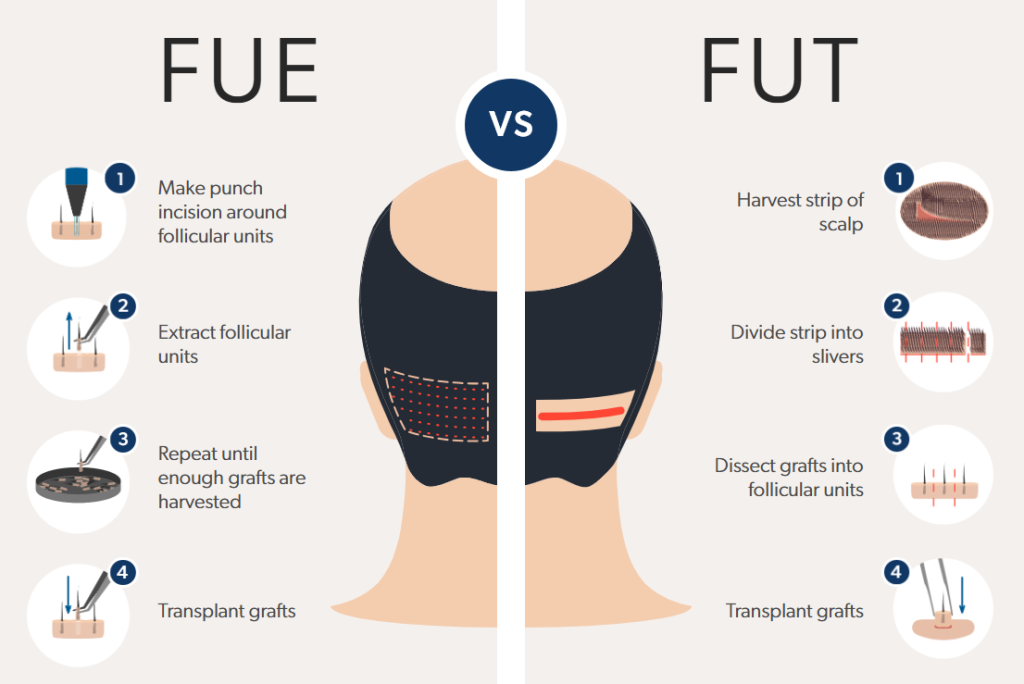
Immediate Visual Impact Within months of frontal restoration, you’ll see transformation. The face-framing effect of a natural hairline restores facial proportions and dramatically improves how you present to the world. While your crown continues responding to medical therapies, your frontal restoration delivers the confidence boost that makes the entire journey worthwhile.
Phase 3: Crown Management Through Medical Optimization
While surgical efforts focus frontally, medical therapies work powerfully in the crown area, often delivering substantial improvement without requiring surgical intervention.
Why Medical Management Excels in the Crown The crown receives excellent blood supply, making it particularly responsive to minoxidil’s circulation-enhancing effects. The vertex area (the highest point on the back of the head, often where the whorl, or swirl pattern, of hair is) also responds well to DHT reduction from finasteride. For many patients, consistent use of these medications substantially improves crown density, sometimes eliminating the need for surgical crown restoration entirely.
Even in cases where eventual crown transplantation proves necessary, medical management buys time. By stabilizing and improving the crown while you recover from frontal surgery, we can assess your response to medications and determine whether surgical crown restoration is truly needed or if medical management alone suffices.
The Biological Synergy This coordinated approach, using surgical restoration frontally while medical therapies work in the crown, leverages the strengths of each treatment modality. You’re not waiting years to address your full hair loss; you’re tackling it comprehensively from multiple angles simultaneously.
Phase 4: Enhancement and Maintenance
Comprehensive care extends beyond initial restoration to include enhancement therapies and long-term maintenance protocols.
PRP Therapy Integration Platelet-rich plasma therapy enhances results at multiple points in your treatment journey:
- Pre-surgically: PRP treatments before transplantation strengthen existing hair and optimize scalp health
- During surgery: Bathing grafts in PRP and injecting the recipient area improves graft survival
- Post-operatively: PRP accelerates healing and stimulates both transplanted follicles and surrounding native hair
- Ongoing maintenance: Periodic PRP sessions enhance density and support hair quality long-term
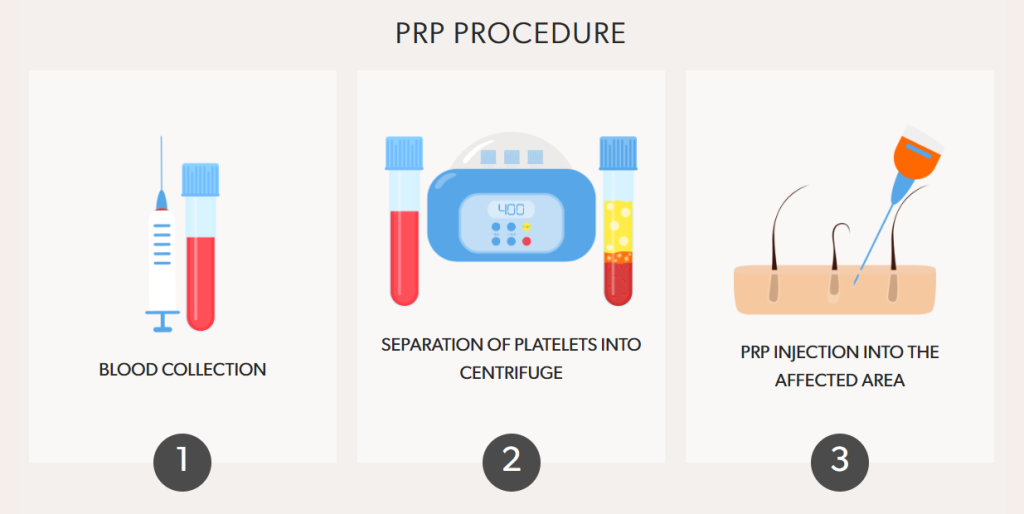
Staged Procedures When Needed Some patients with extensive hair loss require multiple surgical sessions to achieve desired density. Rather than attempting to do everything at once—which can compromise graft survival and create an unnatural appearance—we stage procedures strategically. Initial surgery focuses on the hairline, subsequent sessions add density to the frontal-midscalp transition, and final procedures address the crown if medical management alone proves insufficient.
This phased approach respects donor supply limitations, allows healing between sessions, and builds density progressively for the most natural appearance.
Lifelong Medical Management Pattern baldness doesn’t have a cure, but it does have management. Even after successful transplantation, continuing medical therapy remains essential. Finasteride and minoxidil protect native hair that wasn’t transplanted, prevent the need for future corrective procedures, and maintain the results you’ve invested time and resources to achieve.
The Complete Picture: What Comprehensive Care Delivers
Integrating surgical precision with proven medical therapies creates outcomes that single-treatment approaches simply cannot match.
Maximized Coverage By deploying treatments where they work best—surgery for the frontal hairline, medical management for the crown, PRP for overall enhancement—we address your entire scalp comprehensively rather than leaving gaps in coverage.
Natural Appearance Strategic restoration focused on face-framing areas first, combined with gradual density building, creates results that look organic rather than obviously transplanted.
Sustainable Results Comprehensive care isn’t about quick fixes that fail in five years when untreated areas continue balding. It’s about establishing a sustainable approach that preserves transplanted hair, protects native hair, and maintains your investment long-term.
Optimized Donor Supply When you have finite donor hair and extensive areas needing coverage, strategic allocation becomes critical. Comprehensive planning ensures every graft serves maximum purpose, avoiding the approach of addressing only what’s visible today without planning for tomorrow.
Reduced Need for Revisions Patients who pursue piecemeal treatments often require multiple corrective procedures as untreated areas worsen or initial work proves insufficient. Comprehensive planning from the start minimizes this costly, time-consuming cycle.
What This Means for You
If you’re facing advanced hair loss, the path forward isn’t a single procedure or prescription—it’s a strategic plan that addresses the full scope of your situation.
Comprehensive Evaluation Effective planning begins with thorough assessment:
- Current extent and pattern of your hair loss
- Rate of progression and how long you’ve been losing hair
- Quality and quantity of your donor hair supply
- Your age and how hair loss is likely to progress
- Your goals and what outcomes matter most to you
- Your health status and any factors affecting treatment candidacy
This evaluation determines which treatments to deploy, in what sequence, and with what timeline.
Realistic Expectations Comprehensive care delivers dramatic improvements, but it works within biological realities. Your donor supply limits how much coverage is possible. Your age and genetics influence how hair loss may progress. Your commitment to medical management affects long-term sustainability.
Honest conversations during consultation ensure you understand what your specific situation can achieve and what maintenance will require. The goal is to deliver results that meet or exceed realistic expectations.
The Time Investment Comprehensive care isn’t instantaneous. Medical therapies require months to show effects. Surgical restoration needs healing time before new growth emerges. Staged procedures may span a year or more.
But this timeline serves a purpose. It builds results sustainably, allows your scalp to recover between interventions, and creates the natural appearance that comes from gradual rather than sudden transformation.
The Expertise That Makes It Possible
Comprehensive care for advanced hair loss requires specialized expertise that integrates multiple disciplines.

Surgical Precision Board-certified facial plastic surgeons bring unique qualifications to hair restoration. We understand facial aesthetics and proportions, ensuring restored hairlines complement your features rather than simply filling bald areas. We possess the surgical skills to execute meticulous follicle harvesting and placement that determines whether results look natural or obviously transplanted.
Medical Knowledge Effective medical management requires understanding the pharmacology of hair loss medications, their interactions, their side effect profiles, and how to optimize dosing for individual patients. It means staying current with emerging therapies and knowing when to adjust protocols based on patient response.
Artistic Vision Perhaps most importantly, comprehensive care requires artistic sensibility, which is the ability to envision not just where to place grafts, but how restored areas will integrate with existing hair, how results will appear from multiple angles, and how your appearance will evolve as you age.
At the Quatela Center for Hair Restoration, our double board-certified facial plastic surgeons, hair nurse practitioner and certified trichologist, along with our in-house hair team, combine these competencies with decades of specialized experience in surgical and non-surgical hair restoration. We design comprehensive strategies tailored to each patient’s unique situation.
Your Next Step
Advanced hair loss can feel overwhelming. The good news is that comprehensive solutions exist, performed by specialists who understand both the medical science and the personal significance of restoration.
If you’re tired of watching your hair loss progress, frustrated by treatments that address only part of the problem, or ready to explore what comprehensive care could achieve for your specific situation, we’d love to meet with you at a personal consultation.
We’ll evaluate your hair loss thoroughly, discuss realistic outcomes, explain treatment integration, and answer every question you have. Your hair loss may be advanced, but your options aren’t exhausted. Comprehensive care offers a path forward that single treatments cannot match.
Request your consultation online or call 585.244.0323 to speak to a Patient Consultant.
Leave a Reply