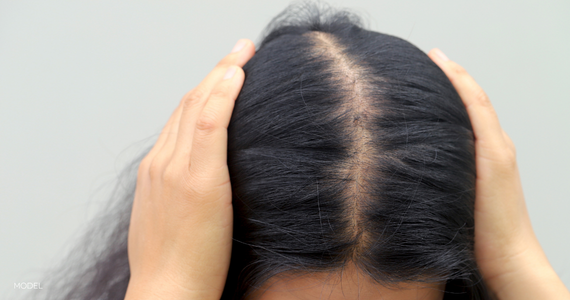
When you look in the mirror and see your scalp showing through where your part used to be dense and full, when ponytails reveal thinning you can no longer hide, when you catch yourself avoiding certain lighting because it makes your hair look sparse, you’re experiencing something profoundly different from male pattern baldness.
Female hair loss isn’t just male pattern baldness with different symptoms. It’s a fundamentally different condition with different causes, different patterns, and different treatment requirements. Understanding these distinctions makes the difference between frustration with ineffective treatments and actual improvement.
The Complexity of Female Hair Loss
“We have some patients who are in mid-life who are experiencing a lot of thinning, men and women both,” explains Stacie, Hair Team Manager and Certified Trichologist at the Quatela Center for Hair Restoration. “I think for men it’s a little bit more straightforward. It’s mostly based on testosterone and genetics and things like that.”
Male pattern baldness follows predictable patterns driven primarily by genetic sensitivity to dihydrotestosterone (DHT). While individual progression varies, the underlying mechanism remains consistent: DHT miniaturizes genetically susceptible follicles, causing progressive thinning in characteristic patterns.
“But for women, it gets a little bit tricky,” Stacie continues. “Of course, you can get genetic loss, but there’s also estrogen and progesterone and vitamin deficiencies. There’s just a lot more that goes into female pattern hair loss.”
This complexity explains why treatments that work well for men often disappoint women. Female hair loss rarely stems from a single cause. It typically involves multiple contributing factors that must be identified and addressed simultaneously for effective treatment.
Understanding Female Pattern Hair Loss
Female pattern hair loss presents differently than its male counterpart, both in how it looks and what drives it.
The Visual Pattern
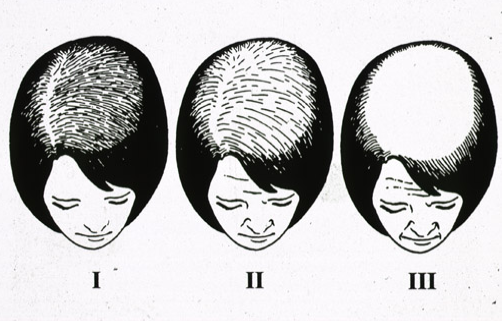
“When women thin, you know, their part gets wider,” describes Julie, Nurse Practitioner and Certified Bioidentical Hormone Replacement Therapy provider at Longevità Medical. “Usually, the frontal hairline is intact. The crown can be thinner. But as you look at the female who’s going through this, their hair is see-through.”
Unlike men, who typically experience frontal recession and defined balding areas, women usually maintain their hairline while losing density throughout the top and crown. The result: hair that looks thin, wispy, and lacking in body rather than completely absent.
This diffuse thinning pattern means your scalp becomes increasingly visible through your hair. What was once thick coverage becomes transparent. Styling that used to add volume now reveals more scalp than you want anyone to see.
The Emotional Impact
“And that’s very unsettling for a female cosmetically,” notes Julie. “It just kind of takes away from what your self-image, what you’d like it to be.”
Hair holds particular significance for women’s identity and self-perception. Thinning hair affects how you feel about yourself, how you present professionally, and how comfortable you feel in social situations.
“Especially when you go back in time, your hair used to be fuller, shinier, denser,” Julie adds. “That’s a pretty big change for women to have to put up with.”
The comparison to how your hair used to look makes current thinning even more distressing. You’re not just dealing with hair loss in the abstract. You’re grieving the loss of something specific: the hair you remember having, the confidence it gave you, the ease with which you once styled it.
The Multiple Causes of Female Hair Loss
Effective treatment begins with understanding what’s actually causing your hair loss. For women, this requires investigating multiple potential contributors.
Hormonal Factors
Estrogen and Progesterone These female hormones play protective roles in hair growth. Estrogen extends the growth phase of hair follicles and supports hair density. Progesterone can help balance testosterone’s effects. As hormone levels fluctuate during perimenopause, menopause, or due to conditions like PCOS, hair thinning often accelerates.
Declining estrogen doesn’t just allow existing testosterone to have greater relative impact. It directly affects follicle health, growth cycle duration, and hair shaft quality. This explains why many women notice significant hair changes during hormonal transitions even when testosterone levels remain normal.
Testosterone and DHT While often considered a male hormone, women produce testosterone too. In some women, even normal testosterone levels can convert to DHT and affect genetically sensitive follicles. Conditions like PCOS that increase androgen production can accelerate this process.
Thyroid Dysfunction Thyroid hormones regulate metabolism throughout your body, including in hair follicles. Both hypothyroidism (underactive thyroid) and hyperthyroidism (overactive thyroid) can trigger hair loss. Since thyroid conditions affect women more frequently than men, this represents a common contributor to female hair thinning.
Nutritional Deficiencies
Hair follicles are among your body’s most metabolically active cells, requiring consistent nutrition to function properly.
Iron Deficiency Iron deficiency, even without full anemia, frequently contributes to female hair loss. Women lose iron through menstruation, making deficiency common. Low iron reduces oxygen delivery to follicles and disrupts hair growth cycles.
Vitamin D Research consistently links vitamin D deficiency to hair loss. This vitamin plays roles in follicle cycling and immune regulation. Many women have suboptimal vitamin D levels, particularly those with limited sun exposure.
B Vitamins B vitamins, particularly B12 and folate, support cell division and red blood cell production. Deficiencies can impair follicle function and hair growth.
Protein and Amino Acids Since hair is primarily composed of protein (keratin), inadequate protein intake or absorption can compromise hair health and growth.
Medical Conditions and Medications
Various health conditions and their treatments affect hair growth:
- Autoimmune conditions like lupus or alopecia areata
- Chronic stress or recent major stressors
- Medications, including certain blood pressure drugs, antidepressants, and cholesterol medications
- Recent surgery, illness, or significant weight loss
- Scalp conditions like seborrheic dermatitis or psoriasis
Genetic Predisposition
Even with all these other factors, genetics still matter. Women with a family history of female pattern hair loss face a higher risk, though hormonal and nutritional factors influence when and how severely that genetic tendency manifests.
Why One Prescription Isn’t Enough
The complexity of female hair loss explains why single-treatment approaches rarely deliver satisfactory results.
A dermatologist might prescribe minoxidil and send you on your way. But if your hair loss stems from iron deficiency combined with declining estrogen and genetic predisposition, topical minoxidil addresses only part of the problem. You might see modest improvement while the underlying hormonal and nutritional factors continue driving your hair loss.
Similarly, hormone replacement that optimizes estrogen and progesterone helps protect your hair, but won’t reverse thinning if you’re also dealing with severe vitamin D deficiency or if genetic factors require additional medical management.
Effective treatment requires addressing all contributing factors simultaneously.
The Comprehensive Approach to Female Hair Loss
At the Quatela Center for Hair Restoration, in partnership with Longevità Medical where appropriate, we approach female hair loss by investigating and addressing the complete picture.
Thorough Diagnostic Evaluation
Comprehensive treatment begins with comprehensive assessment:
Detailed Medical History
- When did your hair loss begin and how has it progressed?
- What’s your menstrual history and current hormonal status?
- What medications do you take?
- Have you experienced recent stress, illness, or major life changes?
- What’s your family history of hair loss?
Physical Examination
- Evaluation of your hair loss pattern and distribution
- Scalp examination for conditions affecting follicle health
- Assessment of hair quality, density, and miniaturization
Laboratory Testing
- Hormone levels: estrogen, progesterone, testosterone, DHEA, thyroid panel
- Nutritional markers: iron studies, vitamin D, B12, folate
- Additional testing based on medical history and symptoms
This thorough evaluation identifies which factors contribute to your specific hair loss, allowing us to design targeted treatment rather than guessing.
Bioidentical Hormone Replacement Therapy (BHRT)
For women experiencing hormonal transitions or imbalances in perimenopause or menopause, bioidentical hormone replacement can provide significant hair benefits.
BHRT uses hormones molecularly identical to those your body produces naturally. By optimizing hormone levels, BHRT:
- Extends the hair growth phase
- Improves hair shaft quality and diameter
- Protects against the relative increase in testosterone’s effects
- Supports overall follicle health
Julie’s expertise in BHRT allows precise hormone optimization tailored to your specific needs, addressing not just hair loss but the broader symptoms of hormonal imbalance.
Medical Management
Prescription medications address the genetic and hormonal factors in female pattern hair loss:
Minoxidil This FDA-approved topical treatment increases blood flow to follicles and extends the growth phase. For women, minoxidil often works particularly well when combined with treatments addressing underlying hormonal or nutritional factors.
Formula 82M This compounded topical medication combines 5% minoxidil with tretinoin and a topical steroid to promote hair retention while improving absorption and reducing irritation to the scalp. Formulated specifically without finasteride, 82M is safe for women and addresses multiple aspects of hair health simultaneously.
The specific medications prescribed depend on your hormone levels, hair loss pattern, and overall health.
Nutritional Optimization
Addressing identified deficiencies provides the raw materials follicles need:
- Iron supplementation when deficiency is identified
- Vitamin D optimization
- B-complex vitamins
- Targeted hair-specific supplements addressing multiple nutritional needs
Nutrafol These oral nutraceuticals are formulated specifically for women, containing natural, medical-grade ingredients such as curcumin, ashwagandha, amino acids, marine collagen, hyaluronic acid, organic kelp, vitamins, and minerals. Nutrafol addresses the effects of stress, controls inflammation, inhibits DHT, and supports overall hair health through comprehensive nutritional support.
Proper nutrition supports all other treatments, ensuring follicles can respond optimally to hormonal optimization and medical therapies.
Platelet-Rich Plasma (PRP) Therapy
PRP uses growth factors from your own blood to:
- Stimulate dormant follicles
- Increase hair density and thickness
- Improve scalp health
- Enhance results from other treatments
For female hair loss, PRP works synergistically with hormone optimization and medical management, often producing results superior to any single treatment alone.
Red Light Therapy
REVIAN Red Hair Growth System We offer the REVIAN Red light therapy cap, an FDA-cleared device that uses dual-wavelength LED technology to stimulate hair follicles in just 10 minutes per day. The targeted red light promotes blood flow to the scalp, reduces follicular inflammation, and creates a healthier environment for growth.
Wireless and app-controlled, REVIAN fits easily into daily routines and works well as a standalone treatment or alongside PRP, medical management, and surgical restoration.
Targeted Hair Growth Products
Medical-grade topical treatments and specialized shampoos support scalp health and optimize the environment for hair growth. These work alongside systemic treatments to maximize results.
Surgical Restoration When Appropriate
For women with significant thinning or areas of permanent follicle loss, hair transplant surgery, either follicular unit extraction (FUE) or follicular unit transplantation (FUT), provides natural, permanent restoration. However, surgery works best when performed after hormonal and nutritional factors are optimized.
Transplanting hair into a scalp still experiencing active loss from untreated hormonal imbalance or nutritional deficiency produces suboptimal results. By addressing underlying factors first, we ensure both transplanted and native hair thrive.
Building Your Personalized Treatment Plan
No two women experience hair loss identically, which means no two treatment plans should be identical either.
Your personalized approach might include:
- BHRT to optimize hormones
- Iron and vitamin D supplementation for identified deficiencies
- PRP therapy every 3-4 months for ongoing follicle stimulation
- Red light therapy for at-home maintenance
- Specialized topical treatments to support scalp health
- Hair transplant surgery once hormonal and nutritional factors are stabilized
Or it might look completely different based on your specific testing results and contributing factors.
The point isn’t following a predetermined protocol. It’s identifying what’s actually causing your hair loss and addressing every piece of that puzzle.
What Results Look Like
Comprehensive treatment for female hair loss requires patience, as improvement depends on how many factors are contributing and how each responds to treatment.
Timeline Expectations:
- Nutritional optimization: 3-6 months to see improvement
- Hormonal adjustment: 3-6 months for hair to respond
- Medical management: 6-12 months for full effect
- PRP therapy: Gradual improvement over multiple sessions
- Surgical restoration: 12 months for complete growth
Most women see progressive improvement rather than sudden transformation. Hair becomes less see-through. The part narrows. Texture and body improve. Styling becomes easier.
The goal is restoring the fullness, shine, and density you remember, creating hair that no longer makes you self-conscious but instead makes you feel like yourself again.
Taking the First Step
If you’re experiencing female hair loss, understanding that it’s complex isn’t discouraging. It’s empowering. It means effective solutions exist when someone takes the time to investigate what’s actually happening.
We don’t hand you a prescription and send you on your way. We investigate. We test. We identify the specific combination of factors affecting your hair. Then we design a comprehensive treatment strategy that addresses each piece of the puzzle.
Your consultation includes:
- Comprehensive evaluation of your hair loss pattern
- Discussion of your hormonal status and medical history
- Laboratory testing to identify nutritional and hormonal factors
- Clear explanation of what’s causing your specific hair loss
- Personalized treatment plan addressing all contributing factors
- Realistic timeline for improvement and ongoing management
Female hair loss isn’t simple. But that doesn’t mean it’s hopeless. With the right expertise, thorough evaluation, and comprehensive treatment addressing hormones, nutrition, genetics, and scalp health simultaneously, restoration is absolutely possible.
You don’t have to accept thinning hair as inevitable. You don’t have to keep trying treatments that address only part of the problem. Comprehensive care that looks at the full picture can build something that actually works.
Experiencing female hair loss? Request your consultation online or call 585.244.0323.
Leave a Reply