
Many women and men in the African American community have spent years managing hair loss with care that is thoughtful and consistent. Protective styling, wigs and hair pieces, scalp oils, and gentle routines built around holistic care all play a role. For many patients, though, one option rarely comes up at all: surgical hair restoration.
“The awareness of the surgical side of hair restoration is almost nonexistent because they don’t even know that that’s an option for them,” says Assunta, a technician on our hair restoration team and certified hair loss practitioner. That gap is part of why we want this conversation to be more open.
Why African American Hair Loss Is Different
Hair loss in the African American community is unique, and it is often more complicated than male genetic hair loss. The reason starts with the hair itself. Textured hair grows in a tight curl pattern, and that shape affects how hair loss appears, how it progresses, and how it should be treated.
Many of the patients we see are dealing with one of these conditions:
- Central centrifugal cicatricial alopecia (CCCA): A scarring condition that most often shows up as crown thinning and can lead to significant loss over time
- Traction alopecia: Hair loss caused by sustained tension from tight styles, extensions, or certain grooming habits
- Alopecia areata: An autoimmune condition that causes patchy hair loss
Each of these conditions has its own cause, course, and treatment path. That is why an accurate diagnosis comes first, before any decision about treatment.
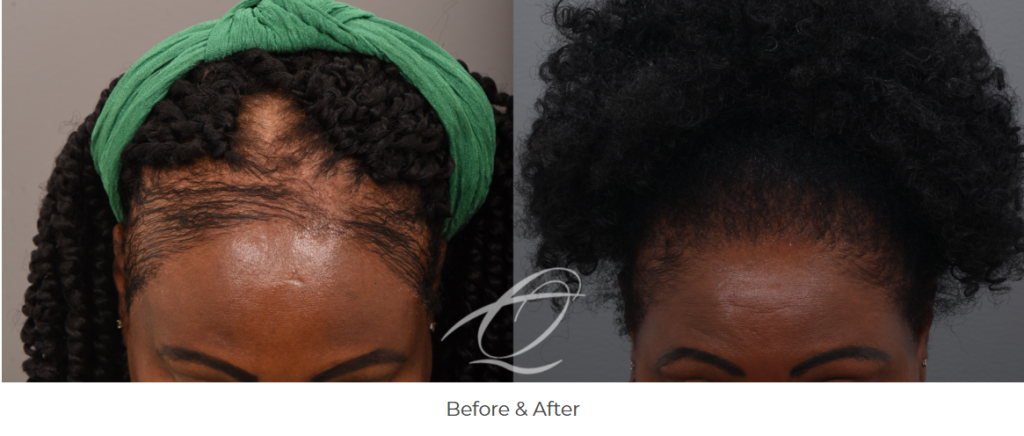
Good Density Can Be an Advantage
Many African American patients have good natural density. That matters for surgical planning. Our team sees strong donor density as a reason many patients can be good candidates for hair transplantation. Candidacy still depends on the diagnosis, the stability of the condition, and the health of the scalp, so a full evaluation is the only way to know for sure.
Breaking Down the Barriers
Several barriers keep patients from taking the first step. Our goal is to make each one easier to overcome:
- Awareness: Many patients don’t know surgery is an option, so they never ask about it.
- Uncertainty: Patients may feel unsure whether their specific condition can be treated surgically.
- Commitment: The idea of a procedure can feel like a big decision before they have answers.
- Being understood: Patients want to feel that providers understand textured hair and their specific concerns.
A consultation addresses all of these. It gives you the opportunity to talk about your hair loss, ask questions, and hear from one of our surgeons who can explain your options. You don’t have to commit to anything to begin the conversation.
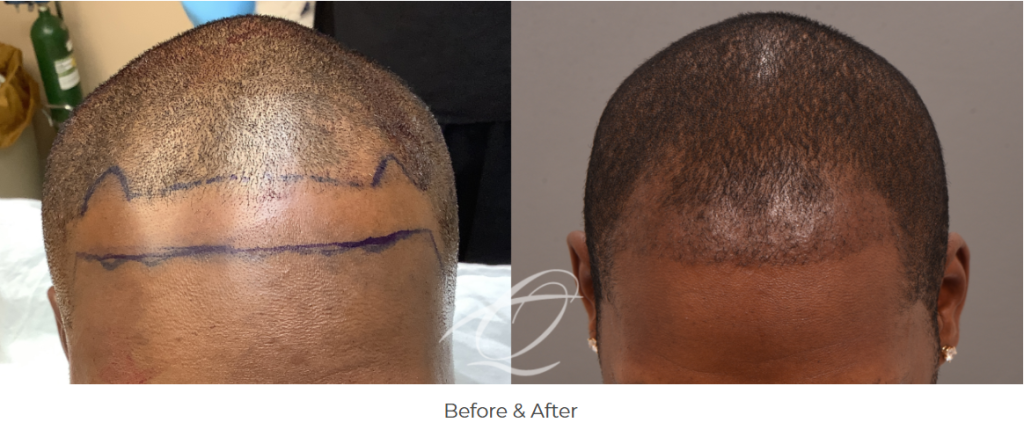
A Holistic Team Behind Every Plan
Our care team brings together a range of credentials. Stacie is a family nurse practitioner, certified trichologist, and a member of the International Hair Restoration Society. Our three facial plastic surgeons, Drs. Quatela, Lee, and Montague, are double board-certified. Our team of in-house hair technicians focuses exclusively on hair restoration.
Having a team this passionate about hair allows us to offer a holistic experience. Patients can work with specialists who understand both the science of hair loss and the day-to-day realities of caring for textured hair.
Options Beyond Surgery
Not everyone is ready for surgery, and not everyone needs it right away. Our care options include:
- Prescription management appointments to address the medical factors driving hair loss
- Injections, including PRFM (platelet-rich fibrin matrix)
- Hair restoration surgery when the patient and the condition are a good fit, and options include FUT (follicular unit transplantation) and FUE (follicular unit extraction)
Your current routine doesn’t have to end when you begin treatment with us. Many patients keep the styling and scalp care they already enjoy while they explore additional options.
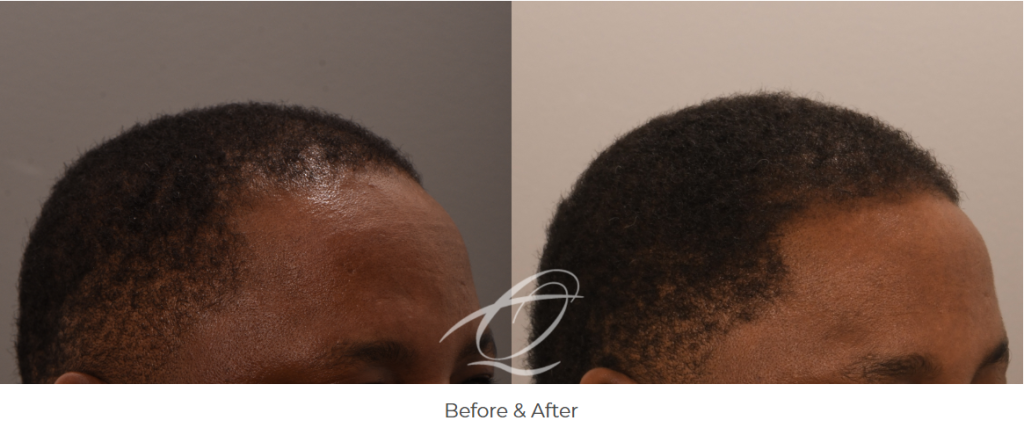
Questions to Ask at Your Consultation
- What is causing my hair loss, and how can it be confirmed by a diagnosis?
- Is my condition active or stable right now?
- Am I a candidate for surgery, and what would it involve?
- Which non-surgical options should I start with?
- How will my treatment plan fit into my hair care routine?
Taking the Next Step
You deserve to know every option available to you. Whether your path begins with a prescription, an injection, or a conversation about surgery, our team is here to help you understand your hair loss and what comes next.
Request a consultation online or call the Quatela Center for Hair Restoration at 585.244.0323. Our team serves patients locally and nationally through our concierge program for out-of-town visitors, making it convenient to learn more no matter where you live.
Disclaimer: Individual results vary and are not guaranteed. Candidacy for hair restoration surgery depends on diagnosis, scalp health, donor density, and whether the underlying condition is stable. A thorough consultation is necessary to determine appropriate treatment and expected outcomes.
Leave a Reply